Archive for January, 2011

Connections, January 2011 - Letter to our Patrons

Sunday, January 30th, 2011

Dear Patrons,


This month, on January 28, 2011, it is the 8th anniversary of my father, Wolf Katz’s passing.  It is a time when I reflect on the impact my father made on my life and that of so many others.  I am fortunate to be able to recall many of the reasons my father was important to me and constantly hear from others what he had done for them - even eight years after his passing.  However, without finding a place to collect my memories, I cannot count on those memories remaining as strong as the years pass.  Also, without establishing a place to share those memories, I cannot assure the ability to clearly convey my memories to the generations to come.


One of my father’s character traits was his ability to think outside the box.  I believe it is this attribute that has found its way into the heart of APIOH - A Place In Our Hearts.  Each module takes its form of recognition to a deeper more meaningful level.  I am proud of the APIOH applications that allow users to share their connections with and reminiscences of those they wish to honor.  I also know it is the way people will share their memories within their organizations for generations to come.


May the memory of my father live on in the hearts of those who loved and admired him for generations to come.  And may all the patrons of APIOH help their loved ones be remembered and also find A Place In Our Hearts.


Steve Katz, CEO
APIOH - A Place In Our Hearts

Oops! Can that be fixed?

Friday, January 28th, 2011

APIOH has been sending out our newsletters for more than two years.  In December 2009, we added our mission statement to the top of the newsletter.  The mission statement is the same as the one that appears on our home page with one exception.  Here’s how it reads.  “APIOH: A Place In Our Hearts provides systems to memorialize our departed, recognize our achievers, and show gratitude to ur donors - within an organization and globally.“  What no one noticed until last month was the missing ‘o’ before ‘ur donors’.

This demonstrates an interesting phenomenon relative to communication and recognition systems.  When a newsletter is sent out, it is affixed in content, in accuracy ‘and in error’.  It can only be corrected through a retraction.  When plaques or other fixed commemorative adornments are used in recognition, despite their splendor, their correction or modification can be difficult and take time to get done.  It is akin to someone getting a tattoo and finding out when it was complete that it is spelled wrong.  The damage can be undone but not without some pain and expense.

Alternatively, when a modifiable solution is used, necessary changes can be easily made at any time.  True once someone sees an error or omission, some damage has already been done, but swift action to correct the error ensures the problem will not perpetuate.

There is an important balance between permanent (static) and modifiable (dynamic) solutions.  One primary function of plaques is that accurately or not, they give an impression of permanence.  The fact that modifiable solutions can change content is what makes many apprehensive to introduce such a solution.  However, solutions such as APIOH’s interactive systems of recognition are not necessarily intended to replace current products, but instead enhance the qualities and characteristics of these less flexible alternatives.  APIOH adds revision capabilities and substance while standard two dimensional representations add a different artistic element. 

APIOH can provide organizations with both solutions, static and dynamic.  Call us and we can work with you to help you determine what mix works best for you.

The Once In A Lifetime Moment

Thursday, January 27th, 2011

The father of a friend of mine passed away earlier this month.  My friend, Nat, is an Orthodox Jew so he sat Shiva.  (Shiva means 7 in Hebrew.  After the burial of a relative, the immediate family sits in mourning for seven days.)  During Shiva, family members have the opportunity to reflect on the loss they are experiencing.  But even more significant, they get to experience the life of the deceased through the eyes and hearts of the family and friends they left behind.  It is a very inspiring experience.

Autumn WalkNat told many stories of his father’s zeal for life and his devotion to his family and friends.  His father was one to never let an opportunity pass him by.  He also didn’t wish to experience life by himself.  He would take his children, friends and clients with him on “Once in a Lifetime” outings.  Whether it was to see the leaves change on that most opportune moment each year, find the perfect spot to experience a meteor shower or seek out the illusive train tracks once commissioned to transport a dying President Garfield in 1881 [see http://www.eyewitnesstohistory.com/gar.htm], Nat’s father wanted to share the experience.  It is no wonder one of his passions even through his final illness was tennis – a sport that could only be shared with others.

Although I was not privileged to have known Nat’s father while he was alive, the legacy he leaves behind tells me I would have been fortunate to have known him.  Participating in his Shiva and hearing the stories of his love of life from his son was very inspirational.  It truly was a Once in a Lifetime Opportunity.

What I Learned From A Blind Man

Thursday, January 27th, 2011

braillle-prayerA few weeks ago during prayer service, I watched a man behind me engrossed in his prayer. He sat closely staring at pages before him, following along carefully and underlining every word with his hands as he said them.  His concentration and deliberation were moving enough until I noticed the pages he was so focused on were blank.  It took me a moment to realize what I was seeing.  The man of course was blind, but his focus on the words…  It was as if not only was he touching every dot of every letter of every word, but they in turn were touching him.
I was very humbled.  I am able to see the words, to explore their meaning and to study further commentators who could add deeper insight to my supplication, but instead of taking advantage of my gift of visual focus, I often find myself void of spiritual focus.  In contrast, the blind gentleman had every reason to be distracted, but was drawn instead to every letter of every word.  He may have been physically blind, but he was spiritually attentive.

Often when we present recognition within our organizations, we have the ability to go beyond the artistic beauty and introduce depth to each person we display.  Yet we believe the surrounding aesthetics will equally represent each of the individuals.  We need to focus on the people we are recognizing.  We need to appreciate the contributions, sacrifices and significance that are the depth of their being.  We need to know what makes them different from the others we are honoring.  We need to know more and share more.  We need to be able to touch them and be touched by them.  That is the recognition we should strive to present and share.  Otherwise, we are truly blind.


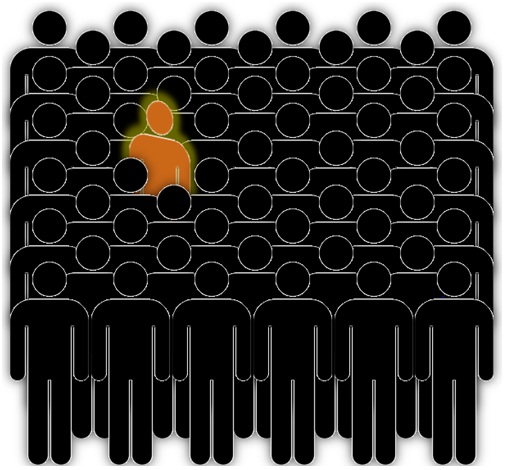
Highlight What Sets Them Apart

Thursday, January 27th, 2011


Highlight What Sets Them Apart


Their accomplishments and life experiences make them unique.  Why portray them the same as everyone else.


APIOH - A Place In Our Hearts allows organizations and their members to recognize the life’s accomplishments behind the names.

Who Was Jane Doe - A Dramatization (reprinted from Feb. 2009)

Friday, January 14th, 2011


Chapter 1 - The Plaque


Charlie - “Bill, do you know who Jane Doe was?”

Bill - “No, why?”

Charlie - “There is a plaque on the wall with her name.  Says she died October 12, 1961.”

Bill - “Sorry, never heard of her.”

Charlie - “Me neither.  Do you know any relatives?  Maybe we can ask them.”

Bill - “No clue.  We may never find out.”


Chapter 2 - APIOH


Donna - “I overheard you guys talking about Jane Doe. I didn’t know her, but maybe she is on the APIOH Memorials board.”

Charlie - “Great idea.  Why didn’t we think of that?  The APIOH Memorials board holds much more information and may even tell us who she was related to or something more about her.”

Bill - “Yeah, but I heard there are 2,500 names in the APIOH system in our organization alone.  We will be browsing names forever.”

Donna - “No we won’t.  That’s one of the nice features of APIOH.  We can do a direct search for Jane and we will know right away if she is in the system.”

Bill - “Where’s the keyboard on that thing?  You can’t search it.”

Charlie - “It’s touch screen.  Let me show you.   See, here she is.”

Bill - “Cool.  It says here that she was born in Italy in 1903.  She grew up in Spain and moved to the US when she was 18.  She married John Doe and had a daughter, Sue Ann, in 1926.  Wow, this is neat.”

Charlie - “And now if we look at the relatives tab, it says her daughter Sue Ann became Sue Ann Smith.  It has Sue Ann’s name underlined.  I wonder why?”

Donna - “It means Sue Ann is on the memorial board as well.  Click on it and it and you will see.”

Bill - “Wow, it gives me all this information about her daughter Sue Ann Smith who married Sam Smith in 1950.  Wait, I know a Sam Smith. Sam Smith is also underlined on Sue Ann’s information. Let’s go to his memorial and check something out.

“I thought so.  Sam Smith is my Uncle Sam.  He is my mother’s brother.  Jane Doe must be my Aunt Annie’s mother.   Aunt Annie passed away just two months ago.  I guess Aunt Annie’s full name is Sue Ann Smith.  I would have never realized just looking at that bronze plaque in the other room.  This APIOH thing is great!”


APIOH – A Place In Our Hearts.  Add some ‘color’ to your memories?  How do you want to be remembered?